From first search
to confident decision.
Describe what you want, let HomesToCompare monitor the market for you, build your shortlist as matches appear, then compare your top picks with AI.
Describe your ideal home
Tell us what you're looking for in plain English — location, budget, size, commute, schools, anything that matters. No forms to fill in, just a few sentences about what you actually want.

We monitor property portals for you
HomesToCompare searches Rightmove and other portals daily and surfaces properties that match your brief. New matches land in your monitor board automatically — you don't need to keep refreshing listing sites.
See a live example hunt
Build your shortlist from the matches
Review each candidate in your monitor board and mark it Pending, Shortlisted, or Dismissed. When you have two properties you're genuinely considering, you're ready to compare.
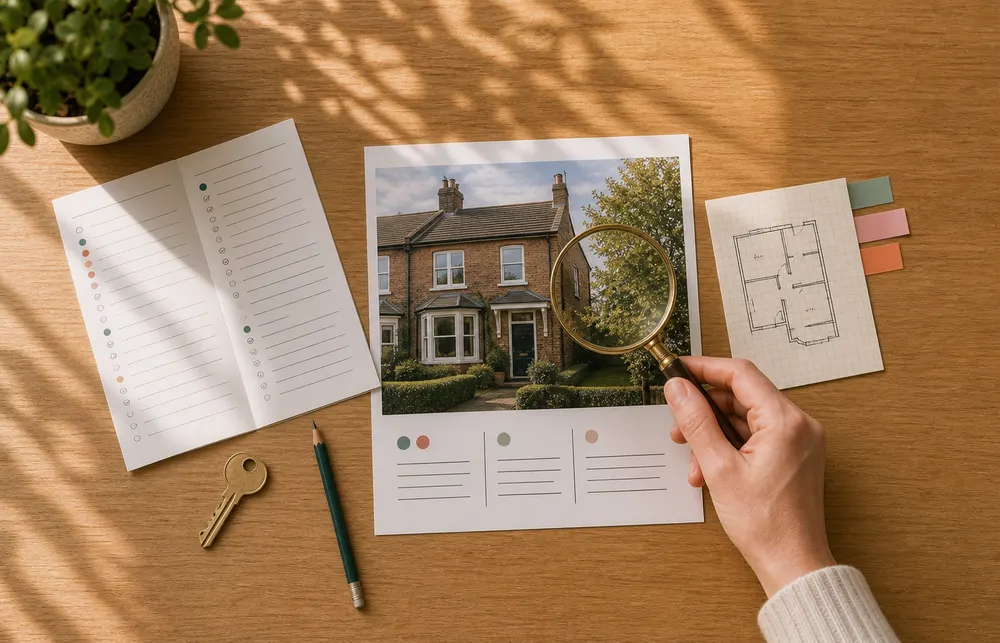
Compare two properties side by side
HomesToCompare pulls the key facts, photos, and trade-offs into one structured page. Basic and Full plans add AI analysis — a recommendation with reasoning, the trade-offs you're making either way, and the specific checks to complete before offering.
See a real example comparison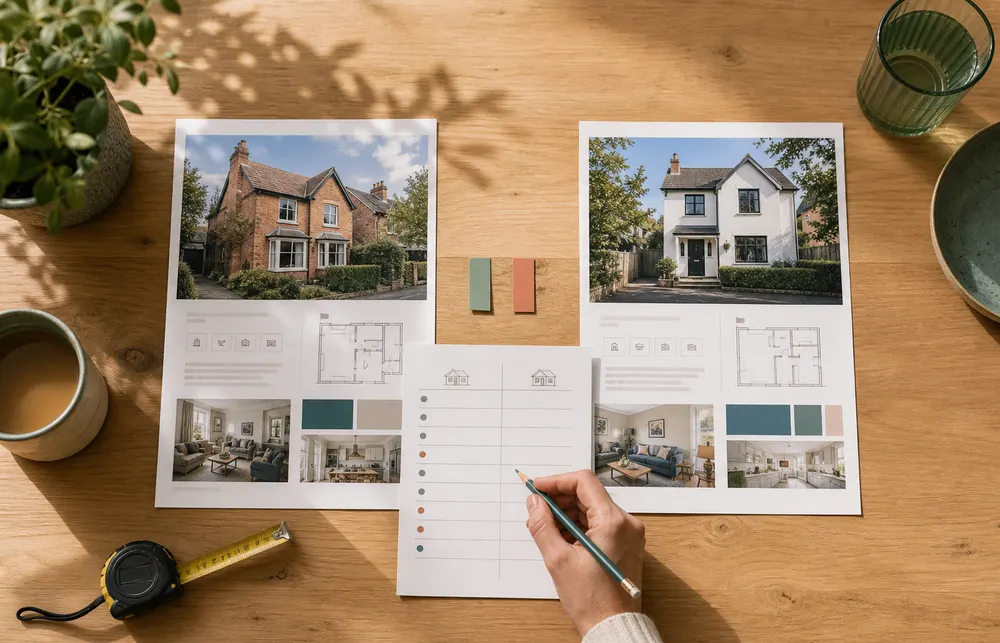
Share and decide together
Send one decision page to your partner, family, or adviser. Everyone reviews the same evidence — no account needed to view. Then compare a different pair, dismiss what doesn't fit, and keep going until you're ready to offer.
What you get at each stage
HomesToCompare handles the search, the shortlisting, and the decision — all in one place.
Daily property monitoring
We search portals every day against your brief and add new matches to your board automatically. Stop refreshing Rightmove.
AI recommendation with reasoning
Which home looks stronger for your situation, and why — with the logic made explicit so you can agree or push back.
What to verify before offering
The specific questions and information gaps that should be resolved before you put in an offer. No generic checklists.
One shareable decision page
Send the comparison to your partner, family, or adviser. Anyone with the link can review it — no account needed to view.
Pairs surface what lists can't.
Think of how an optician tests your eyesight. They never ask you to describe your ideal vision in the abstract. They show you lens A versus lens B. Your preferences become immediately legible — to you and to them.
Property decisions work the same way. Put two real listings in front of someone and their priorities crystallise fast: they discover they care more about the garden than the kitchen, or that the price gap actually feels too wide once the trade-offs are laid out side by side.
You discover more about what you want from two serious comparisons than from months of browsing. Concrete choices surface priorities that were always there but never articulated — this is called preference elicitation. The monitor keeps new candidates coming; the comparisons help you decide.
Why two homes reveal more than twentyStart your hunt
Free plan available with an account. Paid plans include a 30-day trial with no card required until the trial ends.
Start your hunt Read the full documentation → See an example comparison first →